What Causes Fisheyes When Spraying Bathtub or Tile Coatings and How Do I Prevent It?
Ventilation & Containment Systems
It depends on the extent of the fisheyes. Localized fisheyes in a specific area can often be spot repaired — allow the affected coat to dry, sand back to a smooth surface at 400 grit, re-clean the area with appropriate solvent, spot prime if the sanding went through to the substrate, and recoat. Widespread fisheyes across the entire surface indicate a system problem — the contamination was everywhere — and require sanding the entire coat, eliminating the contamination source, re-cleaning, repriming, and recoating from scratch. Don't try to coat over widespread fisheyes; the defects will telegraph through.
What gun cleaning solutions protect seals?
Will using a fisheye eliminator additive affect my coating's durability or gloss?
Professional HVLP spray systems with appropriate nozzle sizes can atomize thicker refinishing coatings effectively.
Not all cleaning solutions are safe for spray gun components.
Choose cleaning solutions that:
- Do not degrade seals
- Do not corrode internal passages
- Remove coating residue effectively
- Use nylon brushes and Zen-Strip Liquid for monthly thorough cleanings.
Regular maintenance prevents costly equipment replacement.
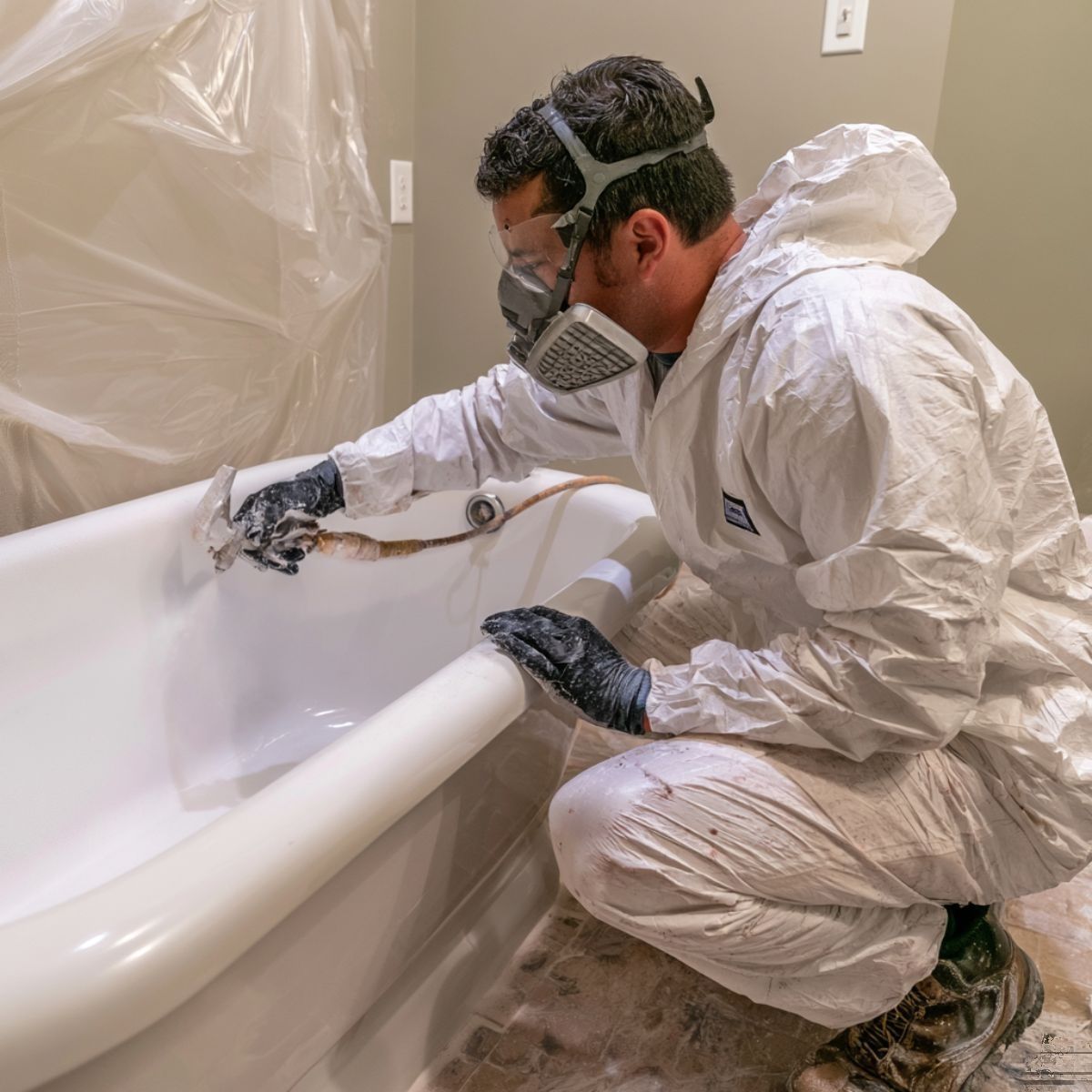
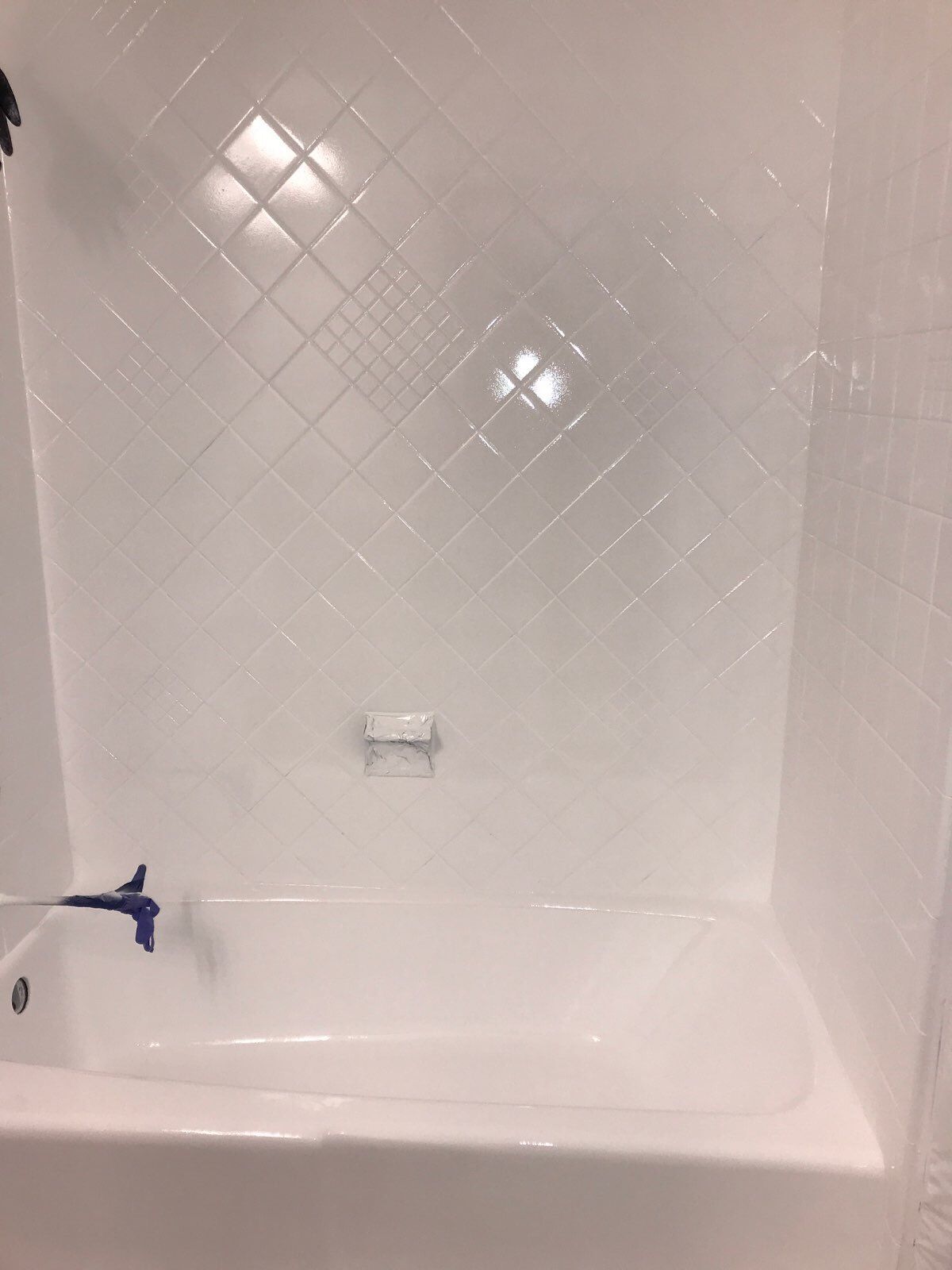
There are a handful of finish defects that stop a refinishing job cold and make you question everything you just did. Fisheyes are near the top of that list. You pull the trigger, the coating hits the surface, and instead of flowing out into a smooth, uniform film, it craters. Small circular voids appear — some tight and sharp-edged, some spreading outward in rings — and the surface that was clean and prepped thirty minutes ago suddenly looks like the surface of a golf ball.
The frustrating part is that fisheyes aren't random. They have specific causes, and once you understand what drives them, they become largely preventable. This guide covers what fisheyes are, why they happen in tub and tile refinishing specifically, how to spot the early signs before the whole coat is affected, and how to recover when they do appear.
What Are Fisheyes in Spray Coating?
Fisheyes — also called craters, crawling, or dewetting in technical coating literature — are circular depressions or voids in a wet coating film where the coating has pulled away from a localized area of the surface. The coating doesn't adhere or spread across that spot the way it should; instead it retracts, leaving a circular opening that can range from tiny pinholes to voids a half-inch across.
The physics behind a fisheye is surface tension. Coatings flow and level because the surface tension of the wet film is uniform — the coating spreads evenly across the substrate it's wetting. When there's a low-surface-tension contaminant on the substrate — an oil, a silicone, a wax residue — that spot has lower surface energy than the surrounding area. The coating film, driven by surface tension dynamics, flows away from the low-energy spot rather than across it. The result is a circular void where the coating refused to wet the substrate.
That's the mechanism. The cause is contamination. Always.
Why Fisheyes Are Particularly Common in Bathroom Refinishing
Bathrooms are contaminated environments. The surfaces being refinished are surrounded by — and have been in regular contact with — products that are among the most potent fisheye triggers in spray coating work.
Silicone is everywhere in bathroom environments. It's the primary ingredient in caulks, sealants, and countless shower and bath cleaners. It's also in hair conditioners, body washes, shampoos, and the "shine" products people apply to tubs and tile to make them look clean. Silicone in any form on a refinishing substrate is a near-guaranteed fisheye source. Even trace amounts — the kind left by a cleaning product that seemed like it was rinsed off — can crater a coat.
Body oils, cosmetic products, and residual bath oils also lower the surface energy of the substrate in the spots where they're present. So does wax and polish — products homeowners sometimes apply to fiberglass or acrylic tubs to restore shine that leave an invisible residue no amount of scrubbing with household cleaners removes.
And then there's the bathroom air. The aerosol environment of a bathroom where someone sprays hairspray, deodorant, or air freshener regularly creates a fine coating of silicone and other low-surface-tension compounds on virtually every surface in the room, including vertical tile walls and the ceiling above the tub. Those deposits are invisible. They don't wipe off with a damp cloth. And they're extremely effective at triggering fisheyes.
What Fisheyes Look Like — and How to Spot Them Early
Fisheyes appear as soon as the wet coating film tries to spread across a contaminated spot. They're usually visible within the first few seconds to a minute after a spray pass, while the coating is still wet. Early signs:
- Small circular craters appearing in the wet film, varying in size but consistent in shape
- "Rings" in the coating where the film has thinned at the edges of a contaminated area
- Coating that looks like it's pulling away from certain spots or failing to wet the surface uniformly
- On a second or subsequent coat, voids that follow the same pattern as underlying contamination that wasn't fully removed
The distribution of fisheyes tells you something about the cause. Fisheyes scattered randomly across the entire surface suggest airborne contamination or a widespread surface residue. Fisheyes concentrated in specific areas — near the faucet, around the drain, along the bottom edge — suggest a localized contamination source like a cleaning product residue that wasn't fully removed. Fisheyes in a pattern that follows your spray passes may suggest equipment contamination — oil from the air line getting into the spray stream.
If you see fisheyes forming in the first pass, stop. Continuing to spray over an active fisheye situation adds more material over contamination that's still present, making the problem worse and the eventual repair harder.
The Primary Causes of Fisheyes in Tub and Tile Refinishing
Silicone Contamination
Silicone is the most common fisheye trigger in bathroom refinishing, and it's the most difficult to fully remove. It doesn't dissolve in water. It doesn't respond well to most household degreasers. It can be invisibly present on a surface that looks and feels clean after a thorough wipe-down.
Sources of silicone on refinishing substrates:
- Old caulk residue — even after caulk is removed, silicone from the body of the caulk can migrate into the surface or adjacent areas during the years it was in contact. The visible caulk is gone; the silicone isn't necessarily.
- Shower and bath sprays — products marketed as daily shower cleaners or tile shine sprays almost universally contain silicone. Regular use means the entire surface has received repeated silicone applications over time.
- Hair and body products — conditioners, moisturizers, and leave-in styling products contain silicone compounds that deposit on tub and tile surfaces during normal use.
- Silicone-based cleaning sprays — products that leave a "protective" shine on surfaces, often used in the same cleaning routine as tile scrubbers.
Body Oils, Wax, and Polish Residue
Petroleum-based residues — body oils deposited through regular bathing, wax or polish applied to the fixture, and some mold-release compounds on newer fiberglass units — lower surface energy the same way silicone does. They're typically more responsive to degreasing than silicone, but incomplete cleaning leaves enough residue to trigger craters.
Airborne Contaminants
In a recently occupied bathroom, the air itself carries contamination. Aerosol products — hairspray, dry shampoo, air fresheners, body sprays — contain solvents, silicones, and other ingredients that settle on surfaces as an invisible film. Cooking oils can travel through shared ventilation in apartments. Even the oils in the ambient air of a regularly used bathroom deposit on surfaces over time.
If you're working in a bathroom where the client used hairspray that morning or sprayed air freshener the night before, those residues are on the tile, the tub, and every surface in the room, regardless of how clean it looks.
Equipment Contamination: Oil in the Air Line
This is the cause that catches contractors off guard because it looks like surface contamination but isn't. When moisture and oil from a compressor get past an inadequate or worn separator and into the air line, they travel to the gun and get introduced into the spray stream. The result is oil droplets depositing on the surface as you spray — fisheyes that follow your spray pattern rather than correlating with surface areas you know were contaminated.
If fisheyes are appearing in a consistent pattern that tracks with your spray passes — evenly distributed, appearing equally on areas you prepped carefully and areas adjacent to fixtures — suspect the air supply. Check your water/oil separator, drain the compressor tank, and inspect your air hose for any contamination. A compressor without an adequate separator or with an overdue separator replacement is a recurring fisheye source.
Contaminated Spray Equipment
A gun that wasn't fully cleaned after a previous job, or one that has old coating, oil, or cleaner residue in the fluid passages, can introduce contamination into the spray stream. Silicone-based gun lubricants applied anywhere near the fluid passages are a particular risk. Guns should be cleaned thoroughly after every use and should never have lubricants applied to components that contact the coating material.
Masking Tape Adhesive
Some masking tapes, when removed or when the adhesive migrates, can deposit a low-surface-tension residue at the tape edge or on the substrate. This is most likely to affect the perimeter of the spray area — the areas immediately adjacent to where tape was applied. Fisheyes concentrated along tape lines after a coat goes on can indicate adhesive transfer from the masking material.
How to Prevent Fisheyes: A System, Not a Single Step
Preventing fisheyes in bathroom refinishing isn't a single product or a single step — it's a system of practices that collectively minimize the chance of contamination reaching the substrate when the coating goes on.
Step 1: Clean Aggressively and in the Right Sequence
The cleaning sequence matters as much as the cleaning products used. Here's the approach:
- Remove all traces of silicone — use a dedicated silicone remover or solvent that specifically attacks silicone deposits before any other cleaning step. If the tub or tile has a history of silicone-based cleaner use or if caulk removal was part of the job, this step is critical.
- Degrease thoroughly — follow silicone removal with a degreasing step to address body oils, wax, and petroleum-based residues. A solvent-based degreaser applied with a clean cloth, wiped in one direction (not back and forth, which redistributes contamination), covers the substrate.
- Rinse, dry, and wipe — a final solvent wipe with a fresh cloth after degreasing removes any remaining residue and leaves the surface ready for etch or prep. This is the step most often rushed when a job is moving fast.
- Don't touch the surface with bare hands after the final wipe — skin oils contaminate surfaces immediately and can be enough to trigger a small fisheye in the finished coat.
For Zen-Tek's full prep sequence for porcelain, enamel or ceramic substrates, including cleaning and etching steps, see the post on
surface prep and coating steps for refinishing fiberglass tubs and showers.
Step 2: Use AdvanEtch for Surface Profile
After cleaning,
AdvanEtch — Zen-Tek's zero-VOC micro-etching sanding liquid — prepares the surface profile that primers need to bond to. The etching process also addresses some residual surface contamination that cleaning alone doesn't fully remove, creating a mechanically clean surface for primer adhesion. It doesn't replace degreasing, but it reinforces the prep by working the surface at a microscopic level.
Step 3: Prime With a Quality Bonding Primer
A high-build bonding primer applied over a properly prepared surface creates a uniform, sealed substrate for the topcoat. Primer fills micro-contamination at the surface level and provides a clean, uniform platform for the topcoat to flow across. Prime-X, Zen-Tek's single-coat epoxy primer, is formulated for strong adhesion to porcelain, fiberglass, acrylic, and ceramic — the substrates where fisheyes are most commonly a concern.
For low-VOC jobs or water-based systems,
WTR-Prime provides the same adhesion-focused priming performance without solvent odor.
Step 4: Maintain a Clean Air Supply
Install and regularly maintain a water/oil separator on your compressor line. Drain the compressor tank before starting jobs to remove accumulated moisture. Replace separator elements on schedule. If you're running long air hoses, consider a second separator point closer to the gun. Oil in the air line is an equipment maintenance problem, and it's entirely preventable with a regular maintenance routine. For a full equipment maintenance reference, the
Professional Refinisher's Equipment Cheatsheet on the Zen-Tek blog covers compressor setup, separator selection, and air hose considerations.
Step 5: Control the Environment Before Spraying
Before spraying any coating, consider what the bathroom environment has been exposed to in the last 24 hours. If the client used the bathroom that morning and the air still carries hairspray or aerosol product, that contamination is on the surfaces you just cleaned. When possible, ventilate the space thoroughly before prepping — open windows, run the bathroom exhaust fan — to clear airborne contamination from the room before you begin. Once the surface is cleaned and prepped, keep the spray area free of aerosols, sprays, and anyone who might introduce contamination before the coating goes on.
How to Fix Fisheyes When They Happen
Despite best preparation, fisheyes can still appear. How you respond depends on when you catch them and how severe they are.
Catching Fisheyes Mid-Job
If you see fisheyes forming during or immediately after the first spray pass:
- Stop spraying immediately. Adding more coats over contamination already on the surface makes the problem worse and the repair more involved.
- Allow the coat to dry to the point where you can sand without smearing.
- Sand the affected area — or the entire coat if the fisheyes are widespread — back to a smooth, uniform surface. Start at 400 grit and work up to remove the defects.
- Identify and eliminate the contamination source before proceeding. Did the fisheyes follow a pattern that suggests airborne contamination? Equipment oil? A specific area of the substrate? The pattern tells you where to look.
- Re-clean the surface with the appropriate solvent or degreaser for the contamination type identified. On jobs where significant silicone removal was required — or where you've caught fisheyes mid-job and suspect silicone may still be present on the surface — this is also the point to consider adding a fisheye eliminator additive as a preventive measure. Add approximately 0.5 oz to your already-mixed topcoat batch, remix thoroughly before spraying, and proceed with the recoat. One important note: fisheye eliminator should only be mixed into the topcoat — never into the primer.
- Reprime if the sanding went through to the substrate, and allow proper dry time before recoating. One thing worth noting: fisheyes rarely show up in the primer coat, even when applied over surfaces with residual contamination — and with Prime-X applied at a good heavy build, they almost never appear at that stage. It's the topcoat where fisheyes typically reveal themselves, even over a primer coat that looks perfectly clean. It's one of those quirks of the refinishing process that catches contractors off guard, but knowing to expect it means you're watching for fisheyes at the topcoat stage rather than assuming a clean primer coat means you're in the clear.
Spot Repair vs. Full Recoat
Whether you can spot repair or need to redo the full surface depends on the extent and distribution of the fisheyes. Isolated fisheyes in one or two areas — where a specific contaminant was localized — can often be addressed with spot sanding, re-cleaning, spot priming if needed, and recoating the affected area blending out to the surrounding finish.
Widespread fisheyes across the entire surface indicate a system problem — the contamination was everywhere, not just in one spot. In that case, the whole coat needs to come back, the contamination source identified and eliminated, and the surface recleaned before repriming and recoating. A fisheye that's not fully fixed before the next coat goes on will telegraph through — the void in the underlying coat creates a surface profile that the topcoat follows, producing a visible defect in the finished surface even if the topcoat itself looks smooth in isolation.
Fisheye Eliminator Additives
Fisheye eliminator additives work by raising the surface tension of the coating, allowing the film to wet and flow over low-surface-tension contamination rather than retracting from it. They're a useful tool when used appropriately — primarily as insurance on jobs where contamination risk is elevated (heavily used bathrooms, fixtures with a history of silicone cleaner use) rather than as a substitute for proper cleaning.
The caution with fisheye eliminators is dosage. These additives are silicone-based compounds themselves — they work by introducing a controlled, uniform silicone into the coating that prevents the film from retracting at contaminated spots. Too much additive, and you've introduced your own contamination into the system — excessive fisheye eliminator in a coat can cause adhesion problems in subsequent coats and may affect gloss. Follow the product's dosage guidance precisely. A little goes a long way. And always test the additive level with the specific coating you're using before using it on a client's job.
Fisheyes vs. Other Spray Defects: How to Tell the Difference
Fisheyes can be confused with other finish defects that produce surface texture or voids. Knowing the difference matters for diagnosis and repair.
Fisheyes Vs. Pinholes
Pinholes are small voids caused by outgassing — air or solvent vapor escaping from the substrate or the coating film during cure. They're typically smaller than fisheyes, lack the circular ring pattern, and are distributed differently (often more random, sometimes concentrated in areas with heavier film build). Fisheyes have a characteristic ring or crater shape from the film pulling away.
Fisheyes Vs. Orange Peel
Orange peel is a uniform surface texture — the coating didn't level properly across the whole surface, not just at contaminated spots. Fisheyes are localized circular defects. If the entire surface has texture, you're looking at orange peel from spray technique or environmental issues, not fisheyes. Zen-Tek's post on
what causes orange peel and how to fix it covers that defect in detail.
Fisheyes Vs. Dry Spray
Dry spray is a texture caused by overspray that partially flashes before reaching the surface, depositing as semi-cured particles rather than wet film. It's a grainy, rough texture — not circular craters.
Fisheyes Vs. Adhesion Failure
Adhesion failure produces lifting, peeling, or delamination of the coating — not craters in a wet film. If you're seeing coating lift after cure, that's an adhesion problem, not a fisheye situation.
Choosing Coatings That Minimize Fisheye Risk
Not all coatings carry equal fisheye risk. Well-formulated professional refinishing coatings are engineered with surface tension characteristics that resist fisheye formation in normal contamination conditions — they give you some margin before a marginal cleaning job becomes a visually obvious defect.
Zen-Tek's topcoat systems — Synergy for solvent-borne applications, Zenix for iso-free 2K finishing, and WTR-Tek for water-based work — are all formulated for the kind of controlled application environment that professional refinishing contractors create. They're not immune to fisheyes from significant contamination, but their formulation characteristics support proper wetting and film formation in a correctly prepared substrate.
Water-based coatings like WTR-Tek have a different surface tension profile than solvent-borne systems and can respond differently to the same contamination sources. In some cases, water-based coatings are less sensitive to silicone contamination than solvent-borne systems. In others, water contamination on a substrate that looks dry can introduce a different type of surface defect. The prep principles remain the same regardless of coating chemistry.
Frequently Asked Questions About Fisheyes in Refinishing
What causes fisheyes in tub, tile, or shower refinishing jobs?
Fisheyes are caused by surface contamination that lowers the surface energy of the substrate in localized areas, preventing the coating film from wetting and spreading uniformly. In bathroom refinishing, the most common causes are silicone residue from caulk, cleaning products, or personal care products; body oils and wax; airborne aerosol deposits; and oil contamination from the air supply line or spray equipment. The coating retracts from the low-surface-tension spot and forms a circular crater or void.
How do I prevent fisheyes from forming in my coating?
Preventing fisheyes requires a thorough prep sequence: dedicated silicone removal before degreasing, full degreasing to address body oils and residues, a final solvent wipe before priming, and a clean air supply with a maintained water/oil separator. Control the environment before spraying — clear airborne contaminants from the room, don't allow aerosol products to be used near the work area, and don't touch the cleaned substrate with bare hands. Using a quality bonding primer over the prepared surface, like Prime-X or WTR-Prime from Zen-Tek, provides a uniform sealed platform for the topcoat that reduces fisheye risk further.
Can fisheyes be caused by silicone contamination from old caulk or cleaners?
Yes — silicone from old caulk is one of the most common and most difficult-to-remove fisheye sources in bathroom refinishing. When caulk is removed, the silicone from its body can remain in the surrounding substrate, especially in porous grout or at the surface of fiberglass. Silicone-based shower cleaners that were used regularly over months or years deposit silicone across the entire tub and tile surface. Both require dedicated silicone remover — not just a general degreaser — as part of the prep sequence.
Do airborne contaminants like oils, sprays, and deodorants cause fisheye in bathrooms?
They can, and this is a cause that's easy to miss because the contamination isn't visible on the surface. Hairspray, dry shampoo, deodorant, and air fresheners all contain low-surface-tension compounds that settle as an invisible film on every surface in the bathroom during regular use. If the bathroom was used that morning before you arrived, those deposits are on the walls, the tub, and the tile regardless of how clean everything looks. Ventilating the space thoroughly before prep, and cleaning the substrate after ventilation rather than before, removes the most recent aerosol deposits from the work area.
How do I know if fisheyes are from surface contamination or from my spray equipment?
Distribution is the diagnostic tool. Surface contamination produces fisheyes that correlate with the substrate — concentrated near faucets and drains where cleaning product residue accumulates, along caulk lines where silicone was present, in areas where a homeowner applied wax or polish. Equipment contamination — oil from the air supply — produces fisheyes that are more uniform and distributed in a pattern that follows your spray passes, appearing equally across the substrate regardless of what was below. If you see fisheyes on areas of the surface you know were perfectly prepped, and the pattern follows your gun movement, check your compressor, separator, and air line before anything else.
Will using a fisheye eliminator additive affect my coating's durability or gloss?
At the correct dosage, a fisheye eliminator additive used within the manufacturer's specifications should not materially affect the topcoat's durability or gloss. The risk is in overdosing — too much silicone-based additive in the coating can reduce inter-coat adhesion if additional coats are applied over it, and excessive amounts can cause gloss reduction or surface haze. Use the minimum effective amount, follow dosage guidance precisely, and treat fisheye eliminator as insurance on a difficult job rather than a routine addition to every mix.
How do I properly clean and degrease a surface to avoid fisheye formation?
The sequence is as important as the products. Start with a silicone-specific remover on any surface that has been exposed to caulk, silicone-based cleaners, or personal care products — silicone doesn't respond to standard degreasers. Follow with a solvent-based degreaser to address body oils, wax, and petroleum residues. Wipe in one direction with a clean cloth; back-and-forth wiping redistributes contamination. Do a final wipe with a fresh solvent-dampened cloth to remove any remaining residue, then allow to dry completely. Don't touch the surface after the final wipe. Then etch with a product like AdvanEtch and prime.
Can fisheyes happen even after sanding and priming the surface?
Yes, though it's less common. If contamination wasn't fully removed before priming, it can be present in the primer film and migrate to the topcoat interface during topcoat application. Contamination introduced after priming — touching the primed surface with bare hands, aerosol products used in the room, oil from the air line — can cause fisheyes in the topcoat over a clean primer coat. This is why the final preparation steps immediately before topcoat — a clean environment, no hand contact, clean air supply — matter even after priming is complete.
Do I need to strip and start over if fisheyes appear, or can I spot repair them?
It depends on the extent of the fisheyes. Localized fisheyes in a specific area can often be spot repaired — allow the affected coat to dry, sand back to a smooth surface at 400 grit, re-clean the area with appropriate solvent, spot prime if the sanding went through to the substrate, and recoat. Widespread fisheyes across the entire surface indicate a system problem — the contamination was everywhere — and require sanding the entire coat, eliminating the contamination source, re-cleaning, repriming, and recoating from scratch. Don't try to coat over widespread fisheyes; the defects will telegraph through.
Will fisheyes telegraph through multiple coats if not fixed right away?
Yes. A fisheye void in an underlying coat creates a surface profile — a depression in the film — that the next coat follows. The topcoat goes on and flows into the void rather than bridging over it, and the crater remains visible in the finished surface. Sometimes the defect becomes less pronounced with each subsequent coat, but it rarely disappears entirely without being addressed. Stop and repair at the earliest coat where fisheyes appear rather than trying to cover them with additional material.
Are fisheyes more common in solvent-based coatings than water-based coatings?
Solvent-based coatings are generally more sensitive to silicone contamination than water-based systems — the solvents in the coating can interact with silicone residues in ways that amplify the surface tension differential and produce more pronounced fisheyes. Water-based coatings like WTR-Tek have a different surface tension profile and can be somewhat less sensitive to trace silicone in normal conditions. That said, significant contamination will trigger fisheyes in any coating chemistry. The prep requirements are the same regardless of what topcoat you're using.
Does spraying in high humidity make fisheye worse?
High humidity is more directly associated with other coating defects — blushing, adhesion failure, extended dry times — than with fisheyes specifically. That said, high humidity in a recently used bathroom means more moisture on the surfaces, which can affect how cleaning solvents work and how effectively contamination is removed during prep. Condensation on a cold surface in a humid environment can also introduce water between the substrate and the coating. The better practice is to control humidity in the work environment generally and ensure the substrate is truly dry before priming and coating. For more on how environmental conditions affect coating performance, see the equipment cheatsheet on the Zen-Tek blog.
Can worn or contaminated airline hoses and compressors cause fisheyes?
Yes — this is an underappreciated cause. Old air hoses degrade internally and can shed oil, rubber particles, or moisture into the airstream. A compressor without an adequately maintained water/oil separator passes oil and moisture downstream. A separator element that hasn't been replaced on schedule becomes ineffective. Any of these introduces contamination into the spray stream that deposits on the substrate as you spray. The diagnostic signature is fisheyes distributed uniformly across the substrate in a pattern that tracks your spray passes. Regular compressor maintenance — draining the tank, replacing separator elements, inspecting hoses — prevents this entirely.
How do I test for contamination before spraying to avoid fisheye?
The water break test is the standard field method. After cleaning and before priming, apply a small amount of clean water to the surface in several spots. On a truly clean, contamination-free surface, water will sheet uniformly rather than beading. Water that beads in spots, or that forms irregular patterns, indicates contamination is still present in those areas. This isn't a foolproof test — silicone in very small amounts may not trigger visible water beading — but it's a quick indicator of obvious surface contamination before you commit to priming and coating.
Is fisheye more likely to occur on certain substrates like fiberglass or acrylic?
Fiberglass and acrylic are among the substrates where fisheyes are most commonly problematic in refinishing work, primarily because of how they're used rather than the substrates themselves. These materials are typically found in shower and tub environments where silicone cleaners, personal care products, and body oils accumulate over years of use. Fiberglass also frequently has wax or polish residue from homeowner maintenance attempts. The substrate itself doesn't inherently attract fisheyes, but the history of use of those substrates typically has made thorough cleaning more critical.
How much fisheye eliminator is safe to use without affecting cure time?
Dosage varies by product and should be followed precisely per the manufacturer's recommendation — typically in the range of a small fraction of a percent by volume of the coating material. Too much fisheye eliminator can affect inter-coat adhesion and, in excessive amounts, may extend cure time by interfering with the crosslinking chemistry of the coating. The goal is to use the minimum effective amount. If you find yourself needing more than the recommended dose to prevent fisheyes, the contamination problem hasn't been adequately addressed at the source.
Does improper masking tape or masking adhesive transfer cause fisheyes?
It can, particularly at the perimeter of the spray area where tape contacts the substrate or an adjacent surface. Some masking tapes use adhesives that can transfer to the substrate when the tape is pressed firmly and then removed, or when the adhesive migrates over time in a warm bathroom. Fisheyes concentrated along tape lines — at the edge of the spray zone where tape was placed — are a sign of adhesive transfer. Use appropriate masking tape, avoid pressing tape aggressively into cleaned substrate in the spray zone, and pull tape promptly after the coat is in its initial cure window rather than leaving it to sit in a warm bathroom for hours.
Can I sand down and recoat just the affected area, or must I redo the whole surface?
For isolated fisheyes in a specific zone — near a faucet, along a caulk line, in one area of the tub floor — spot repair is often viable. Sand the affected area at 400 grit, clean with appropriate solvent, spot prime if needed, and recoat blending into the surrounding finish. For widespread fisheyes distributed across the entire surface, a full recoat is the correct answer — the contamination was systemic, and spot repairs will leave an inconsistent finish. The distribution of the defect tells you which approach is right for the specific job.
Do certain coatings resist fisheye better than others?
Yes — coating formulation affects how the film responds to surface contamination. Well-formulated professional coatings are engineered with surface tension characteristics that provide some resistance to fisheye formation in normal contamination conditions. Zen-Tek's topcoat systems — Synergy, Zenix, and WTR-Tek — are developed for professional refinishing environments and designed to wet properly on correctly prepared substrates. No coating is immune to significant contamination, but products engineered specifically for the refinishing industry typically have better fisheye resistance than general-purpose coatings used outside their intended application.
Are there special primers or sealers that block fisheye-causing contaminants?
A well-applied bonding primer creates a sealed film over the substrate that can contain minor contamination that survived the cleaning process, providing a uniform surface for the topcoat. Prime-X from Zen-Tek is a high-build single-coat epoxy primer that establishes strong adhesion and a sealed substrate surface before the topcoat goes on. WTR-Prime provides the same function in the water-based system. Neither primer replaces cleaning — significant contamination will bleed through an inadequate primer film — but a quality primer applied over properly cleaned substrate gives the topcoat a clean, uniform platform that reduces fisheye risk compared to coating directly over the substrate.