What Is Iso-Free Paint? A Professional Refinisher's Guide to Safer 2K Coatings
Ventilation & Containment Systems
What gun cleaning solutions protect seals?
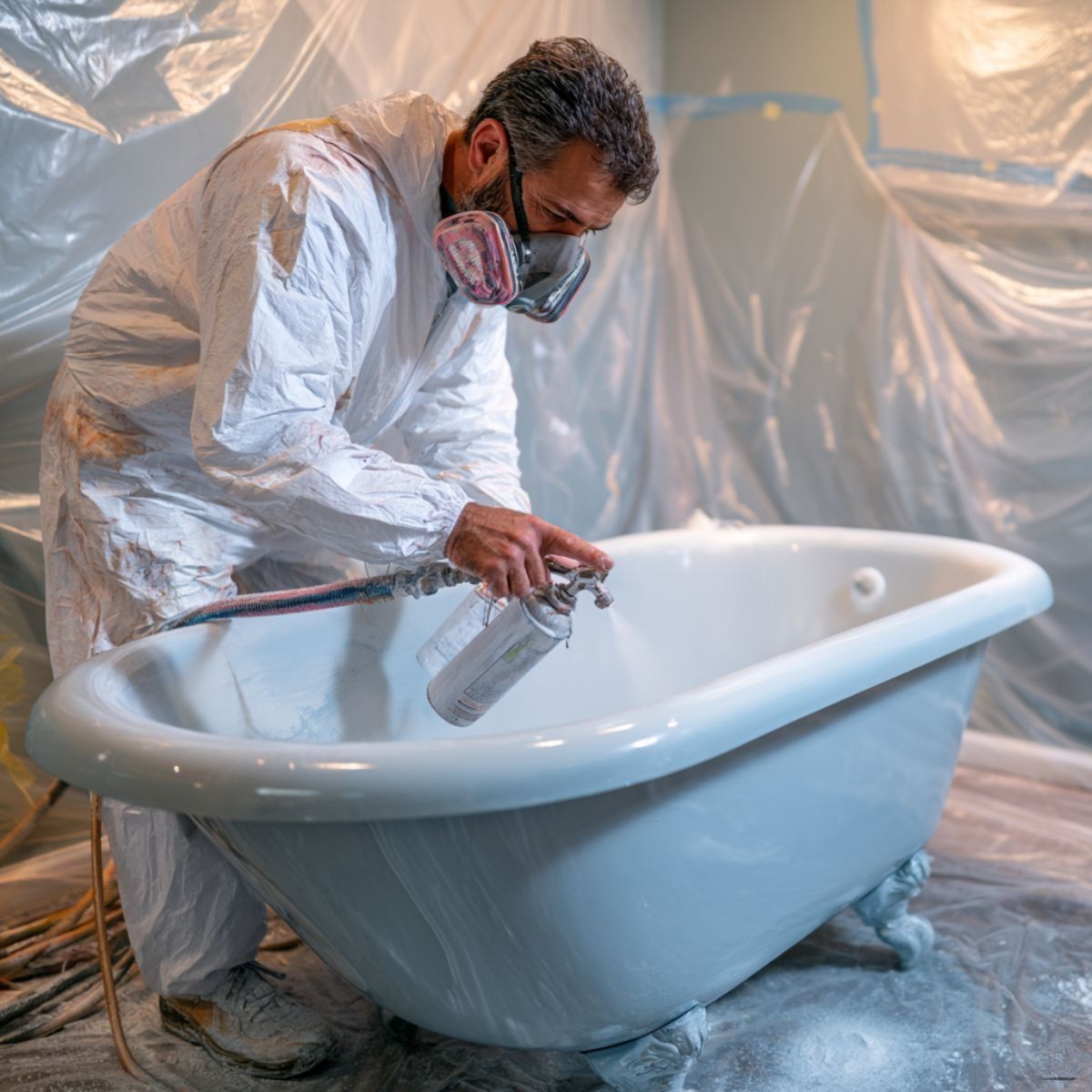
Professional HVLP spray systems with appropriate nozzle sizes can atomize thicker refinishing coatings effectively.
Not all cleaning solutions are safe for spray gun components.
Choose cleaning solutions that:
- Do not degrade seals
- Do not corrode internal passages
- Remove coating residue effectively
- Use nylon brushes and Zen-Strip Liquid for monthly thorough cleanings.
Regular maintenance prevents costly equipment replacement.
Ask a refinisher who's been in the trade for ten or fifteen years what changed most about the industry, and health and safety almost always comes up. Not just regulations — those come and go — but a genuine, ground-level shift in how contractors think about what they're spraying inside someone's home or a hotel bathroom at 7 in the morning.
Iso-free coatings are a big part of that shift. And if you haven't made the switch yet, or you're still trying to figure out whether the performance trade-off is real, this guide will give you a straight answer
What Isocyanates Actually Are
To understand iso-free paint, you need to understand what it replaced — and why that replacement was worth engineering in the first place.
Isocyanates are the reactive hardener compounds used in conventional two-component polyurethane coatings. HDI, MDI, TDI — if you've sprayed traditional 2K urethane topcoats, you've worked with them. That reactivity is the whole point. It's what crosslinks the coating film, giving you the hardness and durability that made isocyanate-based systems the go-to for professional refinishing work for decades.
The trouble is what that same reactivity does inside a human airway.
OSHA classifies diisocyanates as the single leading cause of occupational asthma across industries. The exposure pathway isn't just through direct spray — it's during mixing, during cure, and any time a surface that hasn't fully hardened is disturbed. Standard OV cartridge respirators don't cut it. You need a supplied-air respirator for isocyanate spray, full stop. And in a master bath or a hotel room with the door cracked open, getting that protection right for everyone in the building — not just the tech doing the work — is genuinely difficult.
What makes isocyanate sensitization especially serious is that it's permanent and cumulative. A tech who gets sensitized after years of exposure doesn't just need better PPE going forward. They may never be able to work near isocyanates again without triggering a severe respiratory response. The exposure threshold drops to nearly zero. For some contractors, that's ended careers.
So What Is Iso-Free Paint?
Iso-free paint — you'll also hear it called non-isocyanate paint, isocyanate-free coating, or non-iso 2K topcoat — is a two-component coating that achieves the same basic function without the isocyanate hardener.
It's still a 2K system. You're still mixing a resin and a hardener at a specific ratio. The difference is in the chemistry of that hardener. Instead of diisocyanate compounds, iso-free formulations use alternative crosslinking technologies — silane-modified polymers and cyclic carbonate systems are two of the more common approaches — that cure to a hard, durable film without generating isocyanate aerosols when you pull the trigger.
The "free" in iso-free is doing real work there. It's not a marketing softening of "lower isocyanate content." It means the compound isn't in the product. There's nothing to off-gas during spray or cure that will sensitize your lungs the way conventional isocyanate hardeners can.
One thing worth clarifying: iso-free doesn't mean zero-VOC or odor-free. You're still spraying a solvent-based or water-based chemical system. Respiratory protection and ventilation still matter. The specific risk profile is just meaningfully different.
How Iso-Free Coatings Stack Up Against Traditional 2K Urethane
The pushback you'll hear from contractors who haven't switched usually goes one of two ways: either they've tried an early-generation non-iso product that disappointed them, or they haven't tried one at all and assume the safety trade comes at the cost of performance. Both are understandable, and neither is an accurate picture of where the technology is today.
Gloss
High-gloss finish has always been the standard for tub and tile refinishing — not just because it looks good to a client on day one, but because gloss retention tells you something about how the coating is holding up. Traditional isocyanate systems set a high bar here. Current professional-grade iso-free topcoats can match it. Look for a product with a 90+ gloss rating measured at 60 degrees. That's the line between a coating that looks genuinely sharp and one that looks like a decent effort.
Hardness
Pencil hardness testing is one of the benchmarks the coatings industry uses to compare surface resistance. Isocyanate-catalyzed urethane systems typically land in the 3H to 4H range. A well-engineered iso-free 2K topcoat can hit 4H too — which is the practical threshold for a bathroom surface that needs to handle daily scrubbing, razor blades, dropped shampoo bottles, and whatever else people do in their showers.
Chemical Resistance
This is where early non-iso products fell short, and where the skepticism stuck. Bathroom surfaces see bleach cleaners, rust removers, hair dye, and commercial disinfectants, often in combination. Older iso-free formulations had real weaknesses under prolonged chemical exposure. Professional-grade current versions are formulated specifically for this environment. They hold up.
Yellowing and Color Stability
This is one area where understanding the differences within the iso-free category itself matters. Traditional urethane systems are naturally UV resistant and generally do not yellow over time — that's one area where they've always performed well. The problem is that most competing iso-free products on the market use an epoxy-based formulation, which tends to yellow relatively quickly. That's where the reputation for iso-free coatings and yellowing comes from, and it's a fair criticism of those specific products.
Zenix takes a different approach. Rather than an epoxy-based iso-free chemistry, Zenix is built on an acrylic-based iso-free system, which is substantially more resistant to UV exposure and yellowing than the epoxy-based alternatives currently on the market. It won't outperform a traditional urethane like Synergy on this metric — solvent-borne urethane remains the benchmark for UV stability — but it performs meaningfully better than competing iso-free products, making it a strong choice for contractors who need the safer application profile of an isocyanate-free system without accepting a finish that starts yellowing within the first year.
Ease of Use and Dry Times
One of the practical advantages of Zenix that doesn't get enough attention is how it performs in the window between application and full cure — and specifically how fast it gets there.
With a traditional urethane system like Synergy, full cure comes in around four hours, which is genuinely fast. Zenix uses a water-cure mechanism that takes a bit longer to reach full cure, but that's not where the ease-of-use advantage lives. Where Zenix pulls ahead is in dry time — and for contractors running multi-coat jobs in real-world conditions, fast dry time matters more day-to-day than fast cure time.
Zenix reaches a dust-free state in under five minutes — roughly 50% faster than a conventional urethane system, which typically takes around ten minutes. That difference is more significant than it sounds. A dust-free surface means anything that lands on it won't bond permanently into the film. The faster you hit that threshold, the less you're fighting airborne contamination between coats. Tack-free time — the point where touching the surface no longer leaves residue — also comes faster with Zenix, and handling times are quicker overall.
Both systems reach full cure within 24 hours, so the end point is essentially the same. The difference is in how the coating behaves during the job itself. For contractors who value a smooth, efficient workflow between coats, Zenix's faster dry times deliver a genuinely better application experience compared to competing iso-free products — and a comparable one to traditional urethane, with the added benefit of a safer spray environment.
Respiratory Hazard
The comparison here isn't subtle. Isocyanate systems require supplied-air protection. Iso-free systems don't carry that requirement. A half-face respirator with OV and P100 cartridges is appropriate for most iso-free spray applications — the same setup many refinishers already use for other parts of the job. That's a real difference, not a marginal one.
Why Contractors Are Switching — And Not Just for Safety Reasons
The early adopters who moved to iso-free coatings did so mostly because they had to. A sensitization event, a close call, a health scare. The reactive reasons were real, but they weren't compelling to contractors who hadn't personally been through something like that yet.
The reasons contractors are switching now are more business-driven.
Commercial clients — hotel groups, property management companies, assisted living operators — have gotten more deliberate about what products are used in their buildings. Facilities managers who've sat through a risk management training or dealt with a tenant complaint about chemical odors now ask questions during the bidding process that they wouldn't have asked five years ago. Being able to say your operation uses an isocyanate-free coating system isn't just a talking point. It's starting to be a requirement on certain accounts.
Liability matters too. Isocyanate sensitization is documented, permanent, and creates ongoing exposure risk for your employees and for building occupants. That's a legal and insurance situation that gets more complicated the longer you stay with conventional systems, especially as regulatory scrutiny continues to increase at both the state and federal level.
And then there's the labor side. Finding good technicians is already hard. The ability to tell someone coming onboard that they won't be required to use supplied-air equipment — and that the products they're spraying every day have a materially lower sensitization risk — is a genuine selling point in a tight market.
Spray Application and Best Practices for Iso-Free 2K Coatings
Transitioning from isocyanate-based systems to iso-free doesn't require retooling your operation. The process is similar enough that experienced refinishers adapt quickly. A few things to keep in mind:
Respiratory Protection
Don't confuse "iso-free" with "no protection needed." A half-face respirator with organic vapor and P100 particulate cartridges is the right call for spray application. Always check the product SDS for specific guidance — formulations vary.
Mix Ratios And Induction Time
Two-component systems live or die on accurate mixing. Iso-free products have their own specified ratios and pot lives; don't assume they match what you used with your previous topcoat. Let the mixed material sit through its induction period before you start spraying.
Surface Prep
No topcoat chemistry compensates for inadequate prep. Proper etching, priming, and substrate adhesion are what the finish is built on. That's true with isocyanate systems and equally true with iso-free ones.
Temperature And Humidity
Water-cure iso-free coatings are influenced by ambient moisture levels. Very low humidity can slow cure; very high humidity can affect flow and leveling. Know your product's application window and work within it.
Equipment Cleaning
Mixed 2K material begins crosslinking immediately. Flush your gun, lines, and tip after every job. The pot life on iso-free coatings is finite, and cured material in your equipment is a problem you don't need.
The ISO free product has a longer pot life which in turn allows you more usable time as well as extended cleaning time. The pot life can be 3-5 times longer than the traditional urethanes within the industry.
What to Look For in a Professional-Grade Iso-Free Topcoat
The iso-free category isn't uniform. There are products marketed as non-isocyanate that still underdeliver on performance, and there are formulations that match or beat conventional urethane systems on every metric that matters. The specs below separate the two:
- Gloss rating of 90 or higher at 60 degrees — the threshold for a finish that reads as genuinely mirror-like on tub and tile
- 4H pencil hardness — the practical minimum for a surface that needs to hold up to daily residential or commercial use
- Verified stain resistance against bathroom-specific chemicals: bleach, hair dye, rust removers, disinfectants
- UV stability — color-stable formulations that won't yellow in low-light bathroom environments
- Water-cure chemistry — moisture-activated cure for faster hardness development and practical turnaround times
- Recoat ability — the ability to touch up or recoat without a full strip job, which matters for callbacks and warranty work
Zenix: A Professional Iso-Free 2K Topcoat That Doesn't Ask You to Compromise
Most contractors who've avoided non-iso topcoats have a specific complaint in mind — a product that looked fine at first but started yellowing by month six, or one that tested okay on hardness but stained the first time a client used a bleach spray. Those experiences were real. They came from products that filled a safety niche without actually solving the performance problem.
Zenix from Zen-Tek Coatings was developed around the contractors who had that exact frustration. The premise wasn't "make something safe that's good enough." It was "make something that professionals would choose on performance alone, and also make it safe."
The formulation delivers a 92+ gloss rating and 4H pencil hardness — on par with the isocyanate systems that professional refinishers built their businesses on. It water-cures to full hardness in 16 hours, which keeps project timelines practical for both commercial and residential work. The self-leveling formula is forgiving enough that consistent results don't require a perfect spray day, which matters when you're sending technicians out on their own.
The finish is engineered to resist the three failure modes that killed the reputation of earlier non-iso products: staining, cracking, and yellowing. Zenix is available factory direct from Zen-Tek, which also keeps the cost-per-job in line for operations watching margins.
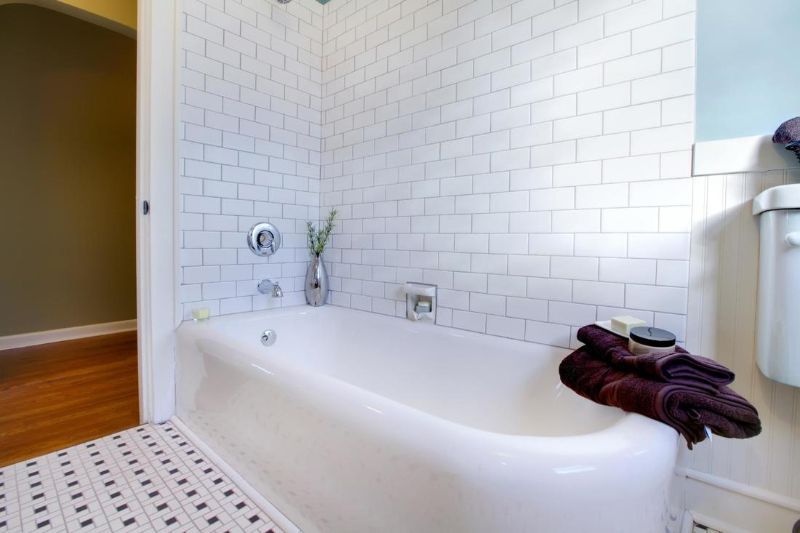
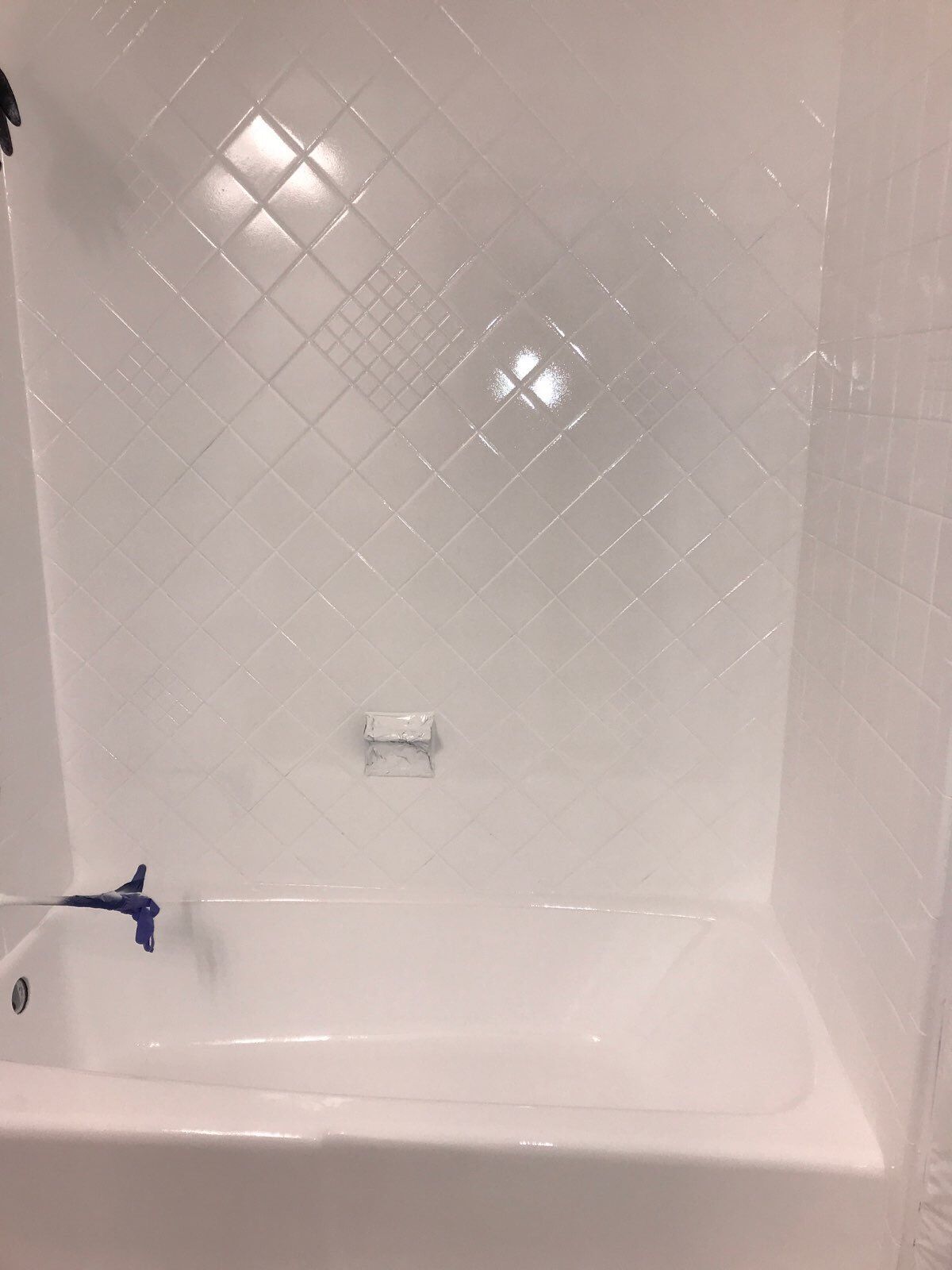
For bathtub refinishing, shower reglazing, tile resurfacing, or countertop work, it's built to handle the full range of surfaces a professional refinishing business works on.
Frequently Asked Questions About Iso-Free Paint and Safer 2K Coatings
What does "iso-free" mean in a two-component coating?
It means the hardener component doesn't contain isocyanates. Standard 2K polyurethane coatings rely on diisocyanate compounds to drive the crosslinking reaction that hardens the film. Iso-free systems use different chemistries — silane-modified polymers and cyclic carbonate formulations are two examples — to achieve the same result without the isocyanate hazard.
Are iso-free coatings as durable as traditional 2K urethane finishes?
Current professional-grade formulations, yes. Early non-iso products had real weaknesses — softer hardness ratings, poor stain resistance, yellowing issues. That's not the landscape anymore. Well-engineered iso-free topcoats like Zenix deliver 92+ gloss and 4H pencil hardness, which is comparable to what contractors have come to expect from isocyanate-catalyzed systems.
Do I still need to wear respiratory protection when spraying iso-free coatings?
Why do isocyanate coatings cause occupational asthma?
Isocyanates are highly reactive molecules that bond readily with proteins in human tissue, including the mucous membranes and airways. With repeated exposure, the immune system can become sensitized — and once sensitized, even trace amounts of isocyanate exposure can trigger a severe asthmatic response. What makes it particularly serious is that sensitization is permanent. There's no threshold that becomes safe again after the immune system has been primed. OSHA cites diisocyanates as the leading cause of occupational asthma across industries for exactly this reason.
Can iso-free topcoats be applied over the same substrates as conventional refinishing coatings?
Generally, yes. Acrylic, fiberglass, porcelain, cast iron, and ceramic tile are all compatible with professional-grade iso-free 2K topcoats. The prep process — cleaning, etching, priming — is the same. The topcoat chemistry changes; the foundation work doesn't.
How does Zenix compare to other iso-free products on the market when it comes to yellowing?
This is an important distinction that often gets lost in the broader conversation about iso-free coatings. Traditional urethane systems don't typically yellow — UV stability has always been one of their strengths, and no iso-free product is going to outperform a quality urethane on that metric.
Where the real comparison matters is within the iso-free category itself. Most competing iso-free products on the market use an epoxy-based formulation, and epoxy-based coatings are well known for yellowing — often relatively quickly. If you've heard contractors say that iso-free finishes yellow, that's the product they're talking about.
Zenix is formulated differently. It's an acrylic-based iso-free system rather than an epoxy-based one, which makes it substantially more resistant to UV exposure and yellowing than the competing iso-free products currently available. It won't match a traditional urethane like Synergy on UV stability — that's worth being honest about — but for contractors who need the safer application profile that comes with an isocyanate-free system, Zenix is in a different league compared to the epoxy-based alternatives. You're getting the safety benefits of iso-free chemistry without accepting the yellowing problems that have given some iso-free products a poor reputation in the field.
How long does an iso-free 2K coating take to fully cure?
It depends on the formulation, but many iso-free systems use water-cure chemistry and reach full hardness in sixteen hours or less under normal conditions. That's competitive with solvent-borne isocyanate systems and often faster, which makes a real difference on commercial jobs with tight turnaround expectations.
How hard is it to switch from isocyanate-based products to iso-free coatings?
Easier than most contractors expect. The application process is fundamentally the same — spray equipment is compatible, prep steps are identical, spray technique carries over. The variables that change are the mix ratio, induction time, and pot life specific to the new product. Give yourself a couple of jobs to dial in the feel of the material and you'll be comfortable.
Are commercial clients actually asking for iso-free refinishing services?
More than they were even a few years ago. Hotel operations, property management groups, and healthcare facility contractors have all become more attentive to the chemical exposure profile of service vendors working in occupied buildings. In some cases it's a soft preference; in others it's built into vendor requirements. Either way, being able to offer iso-free refinishing is a differentiator in those conversations — and the gap between contractors who can and contractors who can't is only going to matter more as awareness grows.